

The Historical Journey of Salvatore Ferragamo: From Shoemaker to Global Icon
Few names in the fashion world carry the gravity of handmade mastery in the way Salvatore Ferragamo. What started out as the aspiration of a youthful Italian shoemaker grew into a house identified with high-end shoes, leather goods, and, over the years, one of the most iconic bag lineups in the world. These days, when shoppers hunt for a ferragamo bag or explore a ferragamo shop, they are tapping into more than a century of design thinking grounded in ease, form, and craftsmanship. Understanding that history sheds light on why a salvatore ferragamo bag still commands attention on catwalks and in retail as well.
Shoes formed the foundation of the brand’s story, though the story certainly is not merely about shoes. It is about a tireless pursuit of anatomical precision fused with theatrical glamour, a combination that in time grew to include bags, accessories, and ready-to-wear. This piece follows that trajectory, unpacks how the house’s design language evolved, and provides a hands-on look at the bags shoppers favor now, in 2026.
The Formative Years: A Cobbler’s Obsession
Salvatore Ferragamo was born in 1898 in Bonito, a little town in southern Italy. He crafted his first pair of shoes at age nine, for his sister’s confirmation, and by eleven he had informally apprenticed with a local shoemaker before opening his own small shop at home. This was ferragamobag.com/tote-bags not a hobby. It was an youthful, almost obsessive fascination with how shoes were constructed and how they fit the human foot.
Ferragamo, at sixteen, left for the United States, initially based in Boston before relocating to California. He established a shop in Santa Barbara and later in Hollywood, building and mending footwear for the thriving film industry. This period mattered enormously. Ferragamo explored anatomy at the University of Southern California, convinced that proper shoe design called for an insight into the human body, especially weight distribution across the foot. That scientific grounding would later distinguish the brand from competitors who treated shoemaking as pure aesthetics.
Come the 1920s, he was crafting shoes for Hollywood elite, among them stars like Mary Pickford and Greta Garbo. His standing as the “Shoemaker to the Stars” spread quickly, and demand exceeded what a small workshop could deliver. This friction between artisanal quality and expanding demand would trail the brand for decades, even as it grew to encompass leather goods and, eventually, the salvatore ferragamo bags collections known worldwide today.
Coming Back to Italy and the Rise of a Global Brand
Ferragamo made his way back to Italy in the year 1927, settling in Florence — a city long celebrated for leather-craft mastery and skilled artisans.
In Florence, he set up his company, drawing on longstanding local craft traditions even as he kept innovating.
Access to tanning workshops and skilled hands in Florence enabled him to craft footwear at a level of refinement that was equal to his aspirations.
The Great Depression together with the 1929 stock market crash battered the firm hard, forcing bankruptcy in 1933. Ferragamo chose not to retreat, and instead restructured and rebuilt, proof that his resilience extended beyond design into business acumen. By 1938, he had purchased the Palazzo Spini Feroni in Florence, which remains the company’s headquarters and flagship store today. That building now also houses the Museo Salvatore Ferragamo, a testament to how central heritage remains to the brand’s identity.
Ferragamo’s innovations during this era were authentically pioneering. He patented the cage heel, invented the wedge heel in 1938 relying on cork procured during wartime supply scarcities, and later brought to life the invisible sandal with a barely visible nylon upper, earning the Neiman Marcus Award in 1947. These were not decorative gimmicks. Rather, they were technical solutions born from scarcity and creativity working together — a pattern that would resurface throughout the company’s history.
Moving Beyond Shoes toward Bags, Accessories, and Ready-to-Wear
In 1960, Salvatore Ferragamo died, yet it was his wife Wanda, along with their six children, who assumed control of the company and steered it toward new categories. This is where the brand’s handbag legacy first started coming together. As a natural outgrowth of shoemaking expertise, leather goods became a central pillar of the business through the 1960s and 1970s.
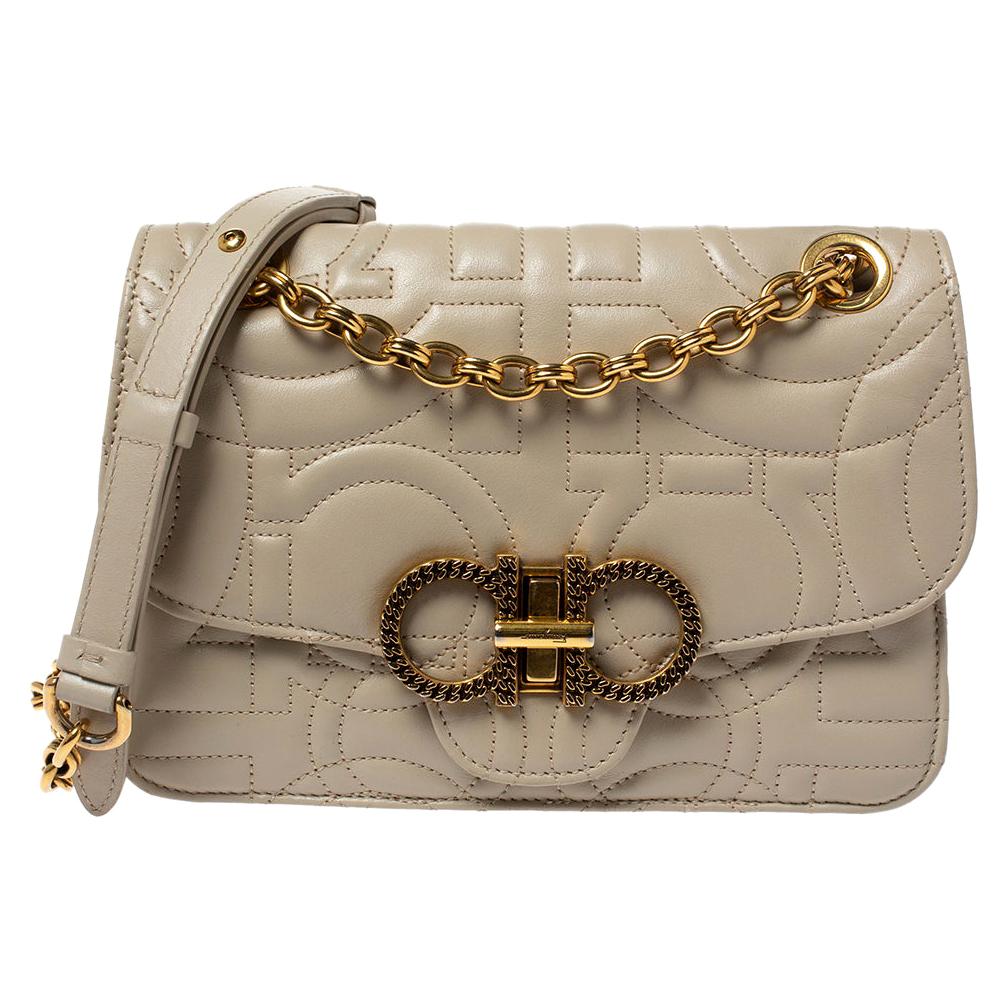
Drawing on the horse-bit and gate designs Ferragamo had employed generations before, the Gancini emblem—a stylized, double-G-style fastening—became the label’s signature closure across bags and accessories. You’ll still spot it on many of today’s designs, giving immediate recognizability be it a wallet, belt, or handbag strap. Shoppers searching for ferregamo or salvatore ferragamo on the web soon come to link the brand with that particular hardware element, owing to that consistent design signature.
Moving through the 1990s and 2000s, under creative direction that included names like Massimo Giorgetti and, in a later chapter, Paul Andrew, Ferragamo’s handbag line moved firmly into luxury handbag conversations alongside houses like Gucci, Prada, and Bottega Veneta. The maison also branched out into ready-to-wear, eyewear, fragrance, and menswear, but bags remained one of the most in-demand and frequently bought segments, all the more so because online retail brought a ferragamo shop to customers far outside Florence or Milan flagship stores.
That which Defines a Ferragamo Bag In Today’s Market
Current-era Ferragamo bags blend heritage detailing with present-day silhouettes. The brand keeps sourcing Italian leather obtained and processed within Italy, a tradition tracing back to Ferragamo’s original Florence workshops. Boxy top-handle constructions, the signature Gancini clasp, and pared-back architectural lines remain defining traits differentiating a salvatore ferragamo bag from more logo-heavy competitors.
Shoppers researching a ferragamo bags overview in 2026 will notice the range spans classic top-handle totes, crossbody styles, and evening clutches, each reflecting a separate slice of the brand’s design history. A number of designs echo archival silhouettes from the 1960s and 1970s, reimagined through updated proportions and hardware suited to modern preferences. Still others favor a pared-back aesthetic, suiting buyers after the heritage link without loud logos.
Material choice also plays a defining role. A mix of calfskin, saffiano-textured leather, and exotic skins have all appeared across various collections across the years, with standards oversight remaining tightly linked to the company’s Florence-based production standards. That reliability is a key driver of the brand’s strong resale value, a consideration well-informed buyers factor into buying choices when comparing luxury houses.
Comparing Sought-After Ferragamo Bag Categories
For anyone hoping to work out which ferragamo bags rank as the best or narrow down which style suits their lifestyle, comparing categories side by side helps clarify each style’s strong points and common uses. Set out below is an overview comparison of typical bag categories found across present-day Ferragamo collections.
| Style Category | Signature Detail | Best Suited For |
|---|---|---|
| Top-Handle Carryall | Boxy shape with Gancini hardware | Work, daily errands, professional settings |
| Cross-Body Style | Adjustable strap, compact frame | Trips away, hands-free daily convenience |
| Evening Clutch | Pared-back form with a polished leather finish | Formal events, evening occasions |
| Shoulder-Carry Bag | Relaxed structure, moderate storage capacity | Daily flexibility, looks spanning casual to smart |
This sort of side-by-side breakdown is a helpful starting point for those building their own ranking of top ferragamo bags, since lifestyle needs matter as much as aesthetic preference. A frequent traveler will prioritize different features than someone shopping primarily for evening wear, even within the same brand.
Why the Brand’s Legacy Still Holds Appeal in 2026
Close to a century on from Salvatore Ferragamo’s first opening of his Florence workshop, the brand’s enduring pull relies on an uncommon pairing: genuine design innovation paired with disciplined craftsmanship. Few luxury houses can point to patented heel constructions, celebrity dressing dating back to silent film Hollywood, and generations of continuous family stewardship, all culminating in a single handbag line.
For shoppers browsing a ferragamo shop today, that history is not just marketing narrative. It shapes tangible product decisions, from the leather sourcing to how the hardware is finished to the silhouette proportions passed down from sketches archived decades ago. Understanding this lineage clarifies why longtime collectors rank certain bags among the best salvatore ferragamo bags, even as newer releases continue drawing first-time luxury buyers pulled in by the brand’s reputation.
Whether one is sizing up a salvatore bag alongside rival brands or merely intrigued regarding the way a humble Italian shoemaker grew a international powerhouse, the core story never changes: painstaking care over every seam and stitch, the drive to experiment within tight limitations, and the conviction that practicality and style should never be pulled apart. To this day, every handbag, shoe, and accessory piece marked with the Ferragamo name draws its foundation from that philosophy, first shaped in a humble studio in Bonito over a century ago.


شارك في النقاش